
Beyond the Grid: Anthony Mueller on Powering the Industrialization of Space
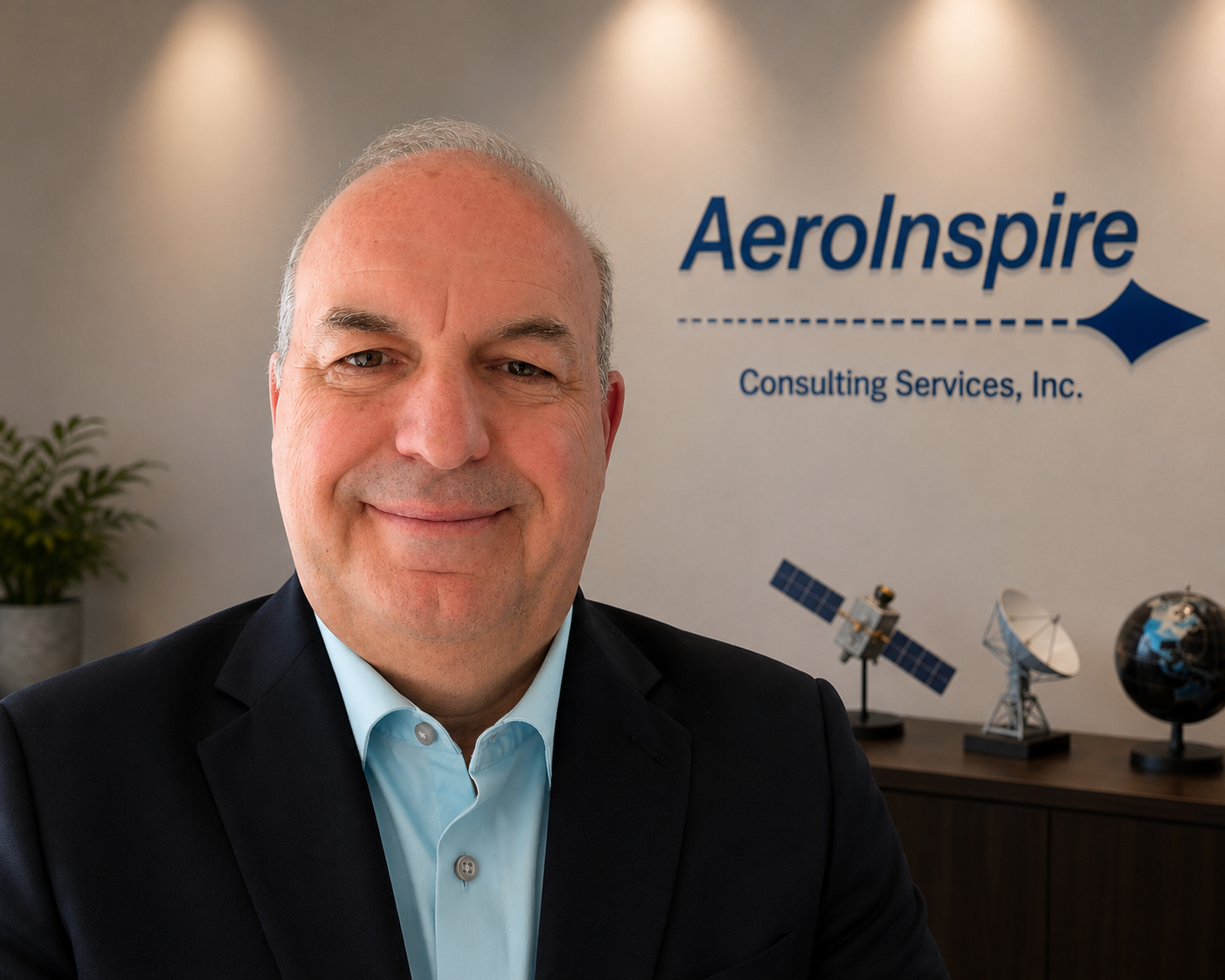
Tony Mueller has helped shape the evolution of space power, leading one of the industry’s most respected space solar organizations through a period of enormous technological change. In this edition of Beyond the Grid, he shares his perspective on how the industry has evolved, why power is becoming strategic infrastructure, and what today’s space companies need to get right as the commercial space economy scales.
You spent a good portion of your career leading one of the world’s most respected space solar power organizations. Looking back, what is one assumption about space power you think the industry got wrong, and what assumption do you think it might be getting wrong today?
I think there was a general industry assumption, dating back—and even as recently as 10–15 years ago—that GEO satellites would be the enduring dominant factor in driving requirements, supply/demand dynamics, technology and related implementation. This drove a very focused R&D pathway across the entire industry where relative efficiency gains of even 1% in the performance of a solar array were considered noteworthy.
Today, I believe the industry has completely embraced an ecosystem of various requirements drivers, resulting in a wide diversity of shapes and sizes of solar arrays, as well as dramatically different approaches to address cost and affordability based on mission life, fleet replenishment cycles and redundancy.
This is increasingly leading to a growing assumption that space solar cells or arrays may not need to perform to the requirements thresholds as they once were in a world that is shifting to proliferated LEO by some accounts. My opinion is that the pivot is never as complete as we may think it might be. There will still be a need for large satellites and missions that operate in GEO and elsewhere, and the very hard lessons learned over the past six decades will still necessitate the drive toward excellence in overall space solar array design in quite a few cases.
There will be a more diverse market, but it won’t obviate the state of the art or the desire to push technical progress. That technical progress may just take on different forms beyond the solar cell itself.
Space is shifting from a handful of flagship missions to an industrial economy built on constellations, logistics, servicing, and eventually lunar infrastructure. How does that change the way leaders should think about power—not just as a subsystem, but as strategic infrastructure?
I’ll probably use this analogy again at some point, however, what you are describing is similar to what we face here on Earth. The electrification of our infrastructure here on Earth can be thought of in space terms as well.
We will need power to operate and sustain communications, have extended missions and explore further, address contingencies, store power when we don’t have access to power generation, etc. Basically, it will be something that is needed everywhere.
One could hypothetically see, in the case of a lunar outpost, a core, centralized power generation station and then a distribution network. Now, I’m not expecting wooden electricity transmission poles on the moon; however, the point is the similarity to strategic infrastructure here on Earth—where a grid mentality occurs—just now in space.
That said, how that power gets generated (and then stored), and how it gets distributed may be more diverse and will most likely result in less reliance on the asset needing power to be solely relying on one source.
Throughout your career, you’ve had a front-row seat to the tension between pursuing the highest technical performance and building something that can actually scale. Where do you think the next decade will require the industry to rethink that balance?
That has indeed been a tension, and as I mentioned before, industry has gone to great lengths to improve incrementally, to get another 1% out of a system.
As we can see in practically any space technology, there is a trade space in terms of performance, mass, volume and other technical parameters, along with cost, as well as time (time to produce) as a dimension.
As we go forward, this is not going to be a race to the 35% efficient solar cell that performs great in all environments, can last 15 years, and is cheap enough to make such that we can scale. Those are competing interests in some cases, and furthermore are unlikely to scale.
It is my opinion that the industry is going to have to reconcile segmentation, much like the auto industry has, and embrace over the next decade an era of mass customization matrixed against different market segmentations.
Those who achieve that under one umbrella organization, and not have to rely on transactional handoffs, excessive paper, and constantly improve (reduce) touch time on product, will be advantaged.
If you were advising a startup entering the space industry today, what capability or market would you tell them is being consistently underestimated and why?
I’ve been very consistent in answering this question or similar themes, so I’ll give that answer: spacecraft structures.
I think there has been a consistent underestimation of the “fuselage, wings and tail” of the spacecraft.
As spacecraft designers, we have typically been very payload-centric, and for good reason. That continues to dominate how we think through things in this industry, and in general there is tremendous capability to apply a lot of talent at designing and producing great payloads.
What we sometimes take for granted, however, is that the spacecraft bus has its own need for customization, no matter how common we want to make it. Even the slightest perturbation can have ripple effects that drive panel sizes, insert patterns, thermal management, and more.
This phenomenon then cascades into the supply base, where we expect our suppliers to be agile. There are some great suppliers in this field; however, my opinion is that there are not enough to keep pace with the demand we are now thrusting into the space economy.
Many people think innovation happens because someone invents better technology. In your experience, what separates technologies that transform an industry from technologies that remain impressive demonstrations?
My feeling here is that there needs to be two major ingredients for success in our space industry: early merit on being flight proven (even if not completely successful on first try), and having the benefit of cycle time reduction.
Over the years, I have seen some great ideas and technologies hindered because the next question that gets asked is, “Has it flown yet?”
Even simple prototyping on a CubeSat can drive early learning such that one can get to qualification faster—a somewhat similar example of failing fast.
If one gets past that step, the other question becomes, “How many days or months did it save me?”
You can have a substantially better mousetrap, but if it doesn’t save schedule time against the incumbent technology, it is going to be a long putt to make it.
Looking ten years ahead, what do you think future historians will identify as the real inflection point that enabled a sustainable space economy?
Reusable/re-flyable launch vehicles achieving the repeatable success they have.
This truly drove a different type of math on how many satellites per launch, how to value $/kg to LEO, MEO and GEO, enabling fewer barriers to entry, more fleet diversification, and different economics that have driven the conversation away from the industry-standard 15–25 GEO launches per year of approximately 5,000 kg satellites.
Beyond the technology itself, what leadership lesson has the space industry taught you that applies equally to building organizations, partnerships, and trust?
Customers matter.
Although we can all get our minds excited about space, exploration and new frontiers, I personally believe this industry has been built around trust, reliability and dependability.
Those who participate in this industry have big dreams, great ideas and an amazing appetite for taking calculated risks, sometimes with their own money.
I always try to remind myself of that. It is just like any other terrestrial business as a consumer—we like shopping for something we find credible, reliable and predictable.
To that end, it has been important to remind myself and others that the customer needs to succeed and that we need to have self-awareness—360 degrees of it—to understand their priorities, issues and stakeholder demands.